
Jesus is All I Want
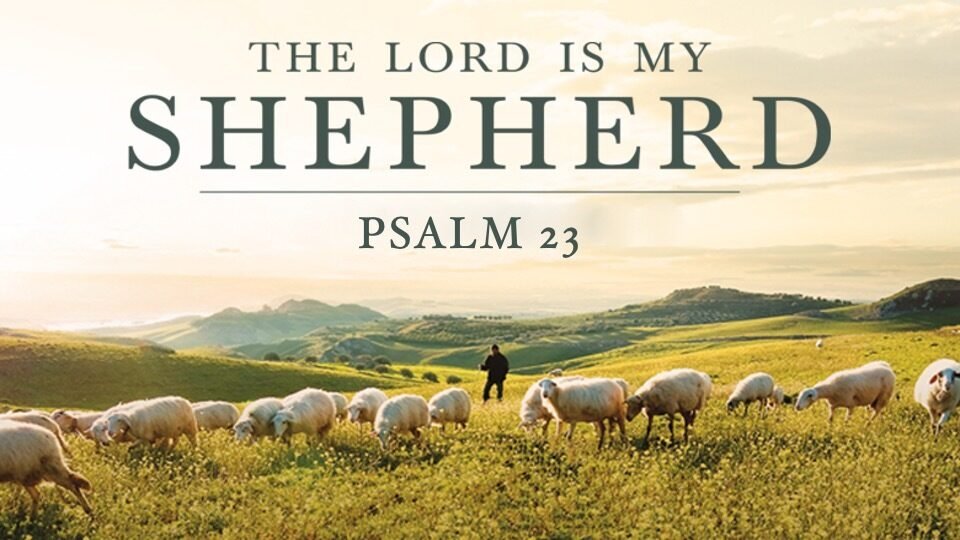
“The Lord is my shepherd; I shall not want.” Psalm 23:1.
“I am the good shepherd. The good shepherd gives His life for the sheep.” John 10:11
I would like to begin this month’s teaching with a quote from W. Phillip Keller. It sets the tone for reminding us that we are HIS sheep and that the Lord Jesus is our Good Shepherd:
“I am His sheep. He owns me, and I’m under His management and care. I have a personal relationship with the God of the universe, a friendship that does for me everything ancient shepherds continually did for their flocks, and more.” 1
Today we are looking at two of the most beloved passages in all of the Word of God — the Twenty-Third Psalm and the tenth chapter of the Gospel of John. Though they are separated by centuries, they speak with one voice: there is a Shepherd who knows His sheep, and His sheep hear His voice.
The Voice of The Shepherd is Calling
The world is full of noise — fear, confusion, and danger on every side. But Jesus, the Good Shepherd, is calling. He is calling you by name. Are you listening to Him daily?
In a world full of voices pulling you this way and that — worries about tomorrow, pressures from others, even your own personal challenges — His voice cuts through them all. There are many voices competing for your attention, but none carries the weight, the peace, and the authority of the voice of the Good Shepherd.
“There are, it may be, so many kinds of languages in the world, and none of them is without significance.” I Corinthians 14:10
Jesus is the Door
The Lord Jesus Christ is the DOOR and salvation ONLY comes through HIM! Never forget that the devil’s only mission is to steal what God has given you, kill your vision, and destroy your destiny. But praise God — Jesus came that you might have life, and have it more abundantly! That abundance is your covenant right as a believer.
“Then Jesus said to them again, “Most assuredly, I say to you, I am the door of the sheep. All who ever came before Me are thieves and robbers, but the sheep did not hear them. I am the door. If anyone enters by Me, he will be saved, and will go in and out and find pasture. The thief does not come except to steal, and to kill, and to destroy. I have come that they may have life, and that they may have it more abundantly.” John 10:7-10
Every one of us must first come to that place Charles Spurgeon spoke of—realizing we’re just sheep, prone to wander, before we can truly say, “The Lord is my Shepherd.”2 And today, I want to talk to you about how believers learn to hear His voice clearly. Hearing the Shepherd’s voice is not some mysterious thing; it happens through reading the Word of God.
God has a plan for your life, and He’s speaking right now—calling you to rest, to protection, to follow. No matter what you’re facing, the Good Shepherd knows you by name.
There is a picture painted across the canvas of Scripture that every believer must come to understand — not merely as poetry, but as present-day reality. It is a picture of the Shepherd and His sheep. David knew it from the hillsides of Bethlehem. Psalm 23: verse 1, he declares, “The Lord is my shepherd; I shall not want.” David knew what it meant to be a shepherd boy out in the fields, protecting the flock from wolves and wild beasts. Listen carefully, there is a truth here that can change the way you live every single day. The key is to claim HIM as your good shepherd for yourself.
Make The Word Personal
Read the personal pronouns for yourself and emphasize each one for YOU! There are several in Psalm 23. This Psalm is universal, but yet deeply personal. Pay close attention to all the He’s & Me’s. Read this Psalm out loud and claim these verses until you know and believe they are for you.
“The Lord is my shepherd; I shall not want. He makes me to lie down in green pastures; He leads me beside the still waters. He restores my soul; He leads me in the paths of righteousness For His name’s sake. Yea, though I walk through the valley of the shadow of death, I will fear no evil; For You are with me; Your rod and Your staff, they comfort me.
You prepare a table before me in the presence of my enemies; You anoint my head with oil; My cup runs over. Surely goodness and mercy shall follow me All the days of my life; And I will dwell in the house of the Lord Forever.” (Psalm 23)
I was reading a book by R. W. Schambach titled The Lord Is My Shepherd — He’s All I Want. He told the story of a pastor who was encouraging children in Sunday School to memorize Scripture. One Sunday, the pastor invited the children to come forward and recite their verses. I like the way Schambach tells it:
“One Sunday, a tiny girl declared that she would quote the Twenty-third Psalm. The pastor said, ‘That is wonderful.’ She was so tiny to have memorized so large a passage of Scripture. When the time came in the service, he called her name. She stood to her feet, beaming with joy, gave her quotation and sat down: ‘The Lord is my shepherd. He’s all I want! Because I have the shepherd, I shall never want for any of the things!” 3
What a powerful message! This little girl spoke the very heart of Psalm 23: JESUS IS ALL I WANT! Many people are focused on getting THINGS, instead of trusting God for ALL in HIM. We should always focus on The Good Shepherd. HE IS ALL I WANT.
Psalm 23 — A Covenant Inventory
Now let us walk through Psalm 23 — not as a list of comforting sentiments, but as a covenant inventory. Every verse is a promise grounded in who the Shepherd is, fulfilled in Christ, and made personally available to every believer who has said, “He is MY shepherd.” This is your New Covenant standing. This is your pastoral care. This is the Word you speak over your life.
Verse 1 — “The LORD is my shepherd; I shall not want.” The Hebrew name here for LORD is Yahweh — the covenant name of God, the self-existent One, the I AM. David does not say Yahweh is a shepherd in the general sense. He says Yahweh is his shepherd. This is not national religion. This is personal covenant.
Verse 2 — “He maketh me to lie down in green pastures: he leadeth me beside the still waters.” “Still waters” in Hebrew are literally waters of rest — quiet, deep, undisturbed. Sheep will not drink from rushing, turbulent water. The shepherd finds the quiet pools. He leads them there.
Verse 3 — “He restoreth my soul: he leadeth me in the paths of righteousness for his name’s sake.” “He restoreth my soul.” The Hebrew word for restore here is shub — to return, to bring back, to turn again. This is the language of recovery. A sheep that has wandered and been brought back. A soul that has drifted and been renewed.
Verse 4 — “Yea, though I walk through the valley of the shadow of death, I will fear no evil: for thou art with me; thy rod and thy staff they comfort me.” Notice what David does not say. He does not say “if” I walk through the valley. He says “though” I walk through it. The valley is real. The shadow is real. There are seasons in the life of every believer when the path runs through dark, narrow terrain — where illness closes in, where loss is near, where the enemy’s presence is felt. The Bible does not promise the believer a life without valleys. It promises a Shepherd who walks through every valley with you.
Verse 5 — “Thou preparest a table before me in the presence of mine enemies: thou anointest my head with oil; my cup runneth over.” This is not escapism. This is not God removing you from every hard situation before He can bless you. This is God setting a table of provision, anointing, and abundance right in the middle of the difficult season. The enemies are still visible. The battle has not yet concluded. And yet the Shepherd says — sit down. There is food here. There is oil for your wounds. There is more than enough.
Verse 6 — “Surely goodness and mercy shall follow me all the days of my life: and I will dwell in the house of the LORD for ever.” David closes with one of the most powerful declarations in all of Scripture. And it begins with “surely” — a word of settled, unshakeable confidence. Not “perhaps.” Not “I hope.” Surely. This is covenant language. This is a man who has walked with the Shepherd long enough to know what the Shepherd is like — and he stakes his life on it.
“Goodness and mercy shall follow me.” The Hebrew word translated “follow” is Radaph — and it does not mean to amble along behind at a distance. Radaph means to pursue, to chase, to run after with urgency. Goodness and mercy are not passive companions. They are active pursuers. They are running after you. Every day. All the days of your life.
Receiving Your Daily Bread
The Holy Spirit reminded me recently of something I cannot afford to forget — and neither can you. As a pastor, I am continually seeking the Lord and pouring out to the people. But there is something different about spending time with the Lord for my own daily bread.
Years ago, Brother Paul Stern sat me down during that season of preparation for full-time ministry. One of the many principles he taught me was this: make certain you are spending time with the Lord for your own spiritual bread. You eat your bread for yourself and you sow seed to others. You never eat your seed — seed is for planting. But YOU must eat your bread daily for your own spiritual nourishment and growth in the Lord.
“Now may He who supplies seed to the sower, and bread for food, supply and multiply the seed you have sown and increase the fruits of your righteousness, while you are enriched in everything for all liberality, which causes thanksgiving through us to God.” (II Corinthians 9:10-11)
This is your season to draw close and be fed. As you daily receive from your Shepherd — His Word, His presence, His provision — that joy rises up and becomes your strength for everything He has called you to do.
The Good Shepherd is ALL WE WANT. Take time today to sit at the Shepherd’s table and let Him minister to you today.
Endnotes
1 A Shepherd Looks at Psalm 23 by W. Phillip Keller, originally published in 1970.
2 The Treasury of David (Commentary on Psalm 23) by Charles H. Spurgeon, originally published in volumes between 1869 and 1885.
3 The Lord Is My Shepherd — He’s All I Want by the evangelist R. W. Schambach.